The War on Kids: Cevin Soling's Provocative Look at Education
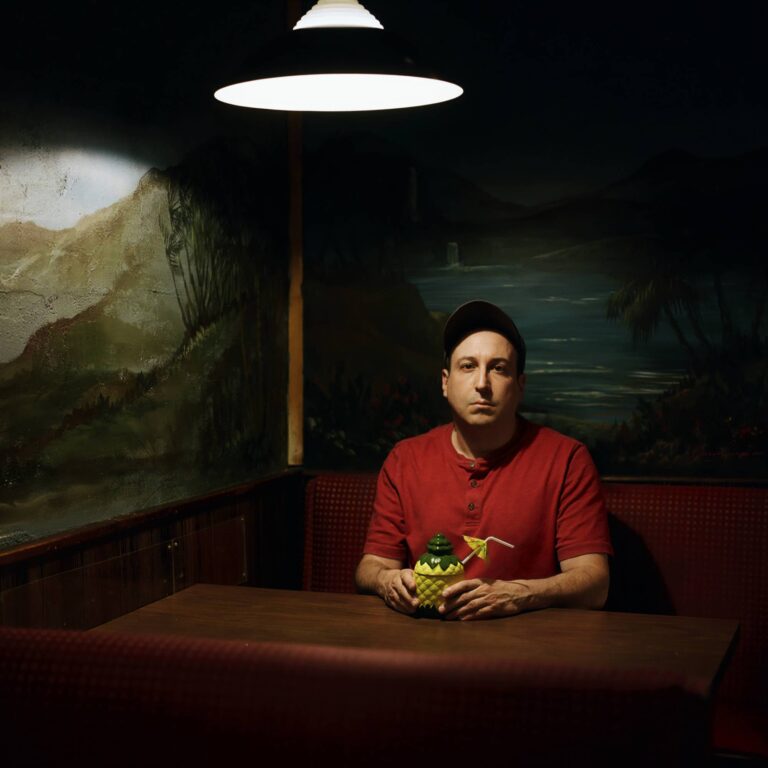
Introduction: Unpacking Cevin Soling's 'The War on Kids'
Welcome back to the blog, fellow explorers of the unconventional and seekers of deeper truths! Today, we're diving headfirst into a topic that resonates deeply with the spirit of our podcast: the often-unseen machinations of the systems that shape our minds, particularly our educational institutions. In our latest episode, we had the immense privilege of speaking with the brilliant and boundary-pushing artist, filmmaker, and philosopher, Cevin Soling. You can catch that conversation right here: Visionary director & artist Cevin Soling. As a natural extension of our discussion, this blog post will unpack one of Soling's most potent and thought-provoking works: his film, The War on Kids. This is not a film for the faint of heart, nor is it a comfortable viewing experience. Instead, it's a direct confrontation with the realities of modern schooling, a sharp critique of its methodologies, and a powerful call to re-evaluate what it means to truly educate. We'll be dissecting its core arguments, exploring the themes that make it so compelling, and considering its significant impact on challenging the very foundations of our educational paradigms. So, settle in, open your minds, and let's embark on this critical examination of education as envisioned through the lens of Cevin Soling.
Who is Cevin Soling? A Multidisciplinary Artist
Before we delve into the specifics of The War on Kids, it's essential to understand the mind behind it. Cevin Soling is not easily categorized. He is a true polymath, an artist whose creative output spans film, music, writing, and philosophical inquiry. Born in the bustling environment of New York City and later raised in Scarsdale, Soling's intellectual journey began with a strong academic foundation. He pursued English at the University of Michigan and Union College, laying the groundwork for his later graduate studies at the prestigious Harvard University. This academic rigor, however, did not confine him to traditional ivory tower thinking. Instead, it seems to have provided him with the tools to dissect and critique the very structures of knowledge and societal norms.
Soling's artistic endeavors are characterized by a persistent willingness to provoke, to question, and to illuminate the absurdities and injustices that often lie beneath the surface of everyday life. His films, including The War on Kids, Ikland, and Mr. Cevin and the Cargo Cult, are not mere entertainment. They are intellectual investigations disguised as cinematic experiences, blending biting humor, incisive social commentary, and profound philosophical questions. He encourages his audience to become active participants in the process of understanding, to interrogate authority, and to challenge the unquestioned cultural dogmas that shape our perceptions. His musical ventures, such as founding the alternative rock bands The Neanderthal Spongecake and The Love Kills Theory, and his stewardship of the independent label Xemu Records, further underscore his commitment to fostering creative expression and independent thought. Across all his platforms – film, music, and writing – Soling consistently returns to the fundamental themes of culture, education, and the intricate tapestry of human behavior, always with the aim of sparking critical thought and championing the cause of creative freedom. This multifaceted approach is crucial to understanding why The War on Kids is such a powerful and impactful film; it’s the product of a mind that sees the interconnectedness of all these aspects of human experience.
The Core Argument: What is 'The War on Kids' About?
At its heart, Cevin Soling's The War on Kids is a searing indictment of the modern educational system. The film argues, with unflinching directness, that far from nurturing and empowering young minds, our schools are, in many ways, actively engaged in a "war" against children's natural curiosity, creativity, and individuality. Soling posits that the standardized, often rigid, and compliance-driven environment of contemporary schooling stifles the very qualities that are essential for critical thinking, genuine learning, and personal growth. The film suggests that the system, in its current iteration, prioritizes obedience over inquiry, rote memorization over deep understanding, and conformity over self-expression.
The "war" Soling refers to is not a physical conflict, but a psychological and systemic one. It's a war waged through curricula that often fail to connect with the lived experiences of students, through pedagogical methods that treat children as passive recipients of information rather than active learners, and through an overarching culture that often values standardized testing and demonstrable results above all else. The film suggests that this approach can lead to a generation of individuals who are adept at following instructions but less equipped to think independently, solve complex problems, or innovate. Soling's argument is not that teachers are inherently malicious, but rather that the systemic pressures and ingrained traditions within education create an environment that is fundamentally at odds with fostering authentic intellectual development. The film challenges viewers to consider the unintended consequences of these educational structures and to question whether they are truly serving the best interests of our children and, by extension, our society.
Key Themes Explored in the Film
The War on Kids meticulously unpacks several interconnected themes that illuminate its central argument. One of the most prominent is the **suppression of creativity and individuality**. Soling argues that the standardized curriculum and rigid classroom structures often leave little room for students to explore their unique talents, interests, and perspectives. Instead, there's an emphasis on fitting into a predefined mold, which can lead to a sense of alienation and a dimming of the innate creative spark that children possess.
Another crucial theme is the **overemphasis on standardization and testing**. The film critiques the relentless focus on standardized tests as the primary measure of educational success. Soling suggests that this narrow focus encourages teaching to the test, prioritizing the acquisition of testable facts over genuine understanding and critical engagement with subject matter. This can lead to superficial learning and a disengagement from the joy of discovery.
The film also delves into the **imposition of authority and conformity**. Soling examines how the school system often instills a culture of obedience and compliance, where questioning authority or deviating from the norm is discouraged. While some level of structure is necessary, the film argues that an excessive focus on conformity can stifle independent thought and the development of critical thinking skills, which are vital for navigating a complex world.
Furthermore, The War on Kids explores the **disconnect between the classroom and real-world relevance**. Many educational approaches, Soling suggests, fail to connect the material being taught to the lives and experiences of the students. This can result in a perception of education as an abstract and irrelevant pursuit, leading to boredom and a lack of motivation. The film advocates for an education that is more experiential, more relevant, and more empowering.
Finally, the theme of **dehumanization within the system** is a powerful undercurrent. By treating students as numbers, as data points, or as future cogs in a societal machine, the system can inadvertently strip away their inherent humanity and their individual worth. Soling's film urges a return to a more humanistic approach, one that recognizes and values each child as a unique individual with potential that extends far beyond standardized metrics.
Challenging Traditional Education Paradigms
Cevin Soling's The War on Kids is not content with merely identifying problems; it actively seeks to dismantle and challenge the very paradigms that underpin traditional education. The film argues that the industrial-era model of schooling, designed to produce compliant workers for a factory-based economy, is fundamentally ill-suited for the demands of the 21st century. This model, Soling contends, has persisted for too long, creating a system that is resistant to change and often counterproductive to genuine intellectual development.
The film actively questions the efficacy of a one-size-fits-all curriculum. Soling suggests that such an approach fails to acknowledge the diverse learning styles, intelligences, and interests of individual students. Instead of a rigid, standardized path, he implies that education should be more personalized, allowing students to delve deeper into areas that ignite their passion and foster their unique talents. This calls for a shift away from a teacher-centric model, where knowledge is passively delivered, to a more student-centered approach, where learners are active participants in their own educational journey.
Moreover, The War on Kids challenges the notion that education is solely about the acquisition of academic knowledge. Soling's broader work, as discussed in our podcast episode, emphasizes the importance of critical thinking, creativity, and emotional intelligence. The film advocates for an educational system that cultivates these essential life skills, equipping students not just with facts and figures, but with the ability to think for themselves, to adapt to change, and to contribute meaningfully to society. This involves a re-evaluation of what constitutes "success" in education, moving beyond mere test scores to encompass personal growth, intellectual curiosity, and the development of well-rounded individuals.
The film also implicitly calls for a more holistic understanding of the learning environment. It suggests that the physical and psychological atmosphere of schools, the relationships between students and educators, and the overall culture of the institution play a crucial role in shaping a child's educational experience. By highlighting the detrimental effects of a system that can feel oppressive and stifling, Soling's work implicitly champions environments that are supportive, inspiring, and conducive to genuine exploration and self-discovery. In essence, The War on Kids is a powerful manifesto for reimagining education, urging us to move beyond outdated models and embrace approaches that truly empower and liberate young minds.
The Impact and Reception of 'The War on Kids'
Since its release, The War on Kids has undoubtedly made waves, sparking conversations and challenging deeply ingrained assumptions about education. The film’s confrontational style and its unflinching critique have resonated with many who have felt disillusioned or concerned about the state of contemporary schooling. It has been praised for its courage in tackling such a sensitive and vital topic, offering a critical perspective that is often absent from mainstream discourse.
The reception of the film has been diverse, as one might expect from a work that dares to question fundamental societal structures. Many educators, parents, and students have found the film to be incredibly validating, articulating concerns they have long harbored but perhaps lacked the language or framework to express. It has been cited as a catalyst for discussions about alternative educational models, homeschooling, and the need for more progressive and child-centered approaches to learning. The film's ability to articulate a clear, albeit provocative, argument has made it a valuable tool for advocacy and for inspiring change.
However, like any work that challenges the status quo, The War on Kids has also faced criticism. Some have found its tone to be overly cynical or its generalizations to be too broad. Traditionalists within the education system may find its critique to be unfair or dismissive of the immense challenges and efforts undertaken by dedicated educators within existing frameworks. The very nature of Soling's provocative style can, by design, alienate those who are not yet ready to question their existing beliefs about education. Despite any criticisms, the film's enduring impact lies in its ability to provoke dialogue, to raise critical questions, and to encourage a deeper, more intentional examination of how we are shaping the minds of future generations. It has successfully placed the concept of a "war on kids" within the educational sphere into the public consciousness, forcing a reckoning that is long overdue.
Connecting the Film to Soling's Broader Work
Understanding The War on Kids is even more rewarding when viewed through the prism of Cevin Soling's entire artistic and philosophical output. As we explored in our podcast episode, Soling’s work is remarkably cohesive, with recurring themes and a consistent intellectual through-line. The critical lens he applies to education in The War on Kids is the same lens he uses to examine culture, media, human behavior, and the structures of power in his other films, music, and writings.
His critique of conformity in education, for instance, mirrors his broader skepticism towards societal pressures that discourage individual expression and critical thought. Whether he's exploring the absurdity of consumer culture in one film or the dogmatic nature of belief systems in another, the underlying message is often the same: question everything, resist unquestioned authority, and cultivate independent thought. The rigid adherence to standardized testing and curricula in schools can be seen as a microcosm of broader societal tendencies to enforce uniformity and suppress dissent.
Furthermore, Soling's emphasis on creativity and genuine engagement in The War on Kids aligns with his lifelong dedication to fostering artistic expression and intellectual freedom through his music and his label, Xemu Records. He believes in the power of art and unconventional thinking to illuminate truths that traditional avenues often miss. The film advocates for an education that nurtures the artist, the philosopher, and the innovator within each child, a vision that is intrinsically linked to Soling’s personal creative endeavors.
His philosophical inquiries, evident in all his work, seek to understand the underlying motivations and consequences of societal structures. In The War on Kids, he's not just criticizing schools; he's dissecting the philosophical underpinnings of a system designed to produce a certain type of citizen. This deeply analytical approach, which seeks to uncover the "why" behind human systems and behaviors, is a hallmark of Soling's multidisciplinary genius. The film is a powerful manifestation of his broader mission: to encourage individuals to think more critically, live more authentically, and to resist the forces that would diminish their inherent potential and their capacity for genuine human connection and understanding.
Conclusion: Rethinking Education in the Modern Era
As we conclude this deep dive into Cevin Soling's impactful film, The War on Kids, it's clear that the conversation we started in our latest podcast episode is far from over. Soling’s work is not merely a critique; it’s an invitation—an urgent plea—to re-examine the very purpose and practice of education in our rapidly evolving world. The film challenges us to move beyond passive acceptance of the status quo and to actively question whether our current educational systems are truly serving the best interests of our children, fostering their innate curiosity, and preparing them for a future that demands creativity, critical thinking, and adaptability above all else.
The War on Kids, much like our conversation with Cevin Soling himself on Visionary director & artist Cevin Soling, serves as a vital reminder that true education is not about filling a vessel but about igniting a flame. It's about empowering individuals to become lifelong learners, independent thinkers, and engaged citizens. As we reflect on Soling's themes of suppressed creativity, the overemphasis on standardization, and the stifling of individuality, we are compelled to ask ourselves: what kind of educational future do we want to build? Do we want systems that produce compliant automatons, or do we aspire to cultivate vibrant, curious, and self-directed individuals who can navigate the complexities of life with wisdom and grace? The answers, of course, lie not in further standardization, but in a bold reimagining of how we approach the sacred task of education, fostering environments that honor the unique potential within every child and champion the enduring power of critical thought and authentic expression.

The Legacy of Dr. Peter Cotton: Beyond the Endoscope