
 Apple Podcasts
 Spotify
 Amazon Music
 PocketCasts
 iHeartRadio
 Pandora
 Blood Pressure Breakthroughs: Mark Young on Zona Plus & Cardiovascular Optimization

Send us Fan Mail Mark Young is a seasoned entrepreneur and executive at Zona Health, the company behind the Zona Plus device. After years of building and launching startups, he joined the team in 2016 with a clear mission: to bring the benefits of isometric exercise and cardiovascular health into everyday homes. Throughout his career in business and technology, a consistent theme has been his passion for education and delivering practical, science-backed solutions in an accessible way. With m...
Mark Young is a seasoned entrepreneur and executive at Zona Health, the company behind the Zona Plus device. After years of building and launching startups, he joined the team in 2016 with a clear mission: to bring the benefits of isometric exercise and cardiovascular health into everyday homes.
Throughout his career in business and technology, a consistent theme has been his passion for education and delivering practical, science-backed solutions in an accessible way. With multiple graduate degrees and a strong track record of scaling startups, Mark has deep expertise in compliance, marketing, and growth—particularly within regulated health and wellness industries.
At Zona Health, he focuses on helping individuals understand how simple, at-home interventions can support healthier blood pressure and improved cardiovascular function. The Zona Plus has also attracted attention from biohackers like Dave Asprey, who has highlighted it as a powerful tool for enhancing cardiovascular health and overall performance.
Mark is a strong guest for podcasts covering health, biohacking, longevity, blood pressure, and cardiovascular wellness, as well as entrepreneurship and the process of building compliant, science-driven products in the health space.
Everyday AI: Your daily guide to grown with Generative AICan't keep up with AI? We've got you. Everyday AI helps you keep up and get ahead.
Listen on: Apple Podcasts Spotify
Relax, Rebalance, and Recharge NaturallyRFT devices help the body relax, rebalance, and activate its natural recovery processes.
Disclaimer: This post contains affiliate links. If you make a purchase, I may receive a commission at no extra cost to you.
16:07 - [Ad] Everyday AI: Your daily guide to grown with Generative AI
16:55 - (Cont.) Blood Pressure Breakthroughs: Mark Young on Zona Plus & Cardiovascular Optimization
You're good.
SPEAKER_01As always, ladies and gentlemen, these are the stories we tell from the Randomness of Nothing podcast. And today I have very special guests who's carved out time out of his busy schedule. There's no excuses with this man, only hard work pays off, and you are ultimately the champion of your own destiny. Mark Young, PhD, entrepreneur, business owner, and all around energetic gentleman. Thank you, sir.
SPEAKER_00Well, I appreciate the invite today, man. I'm looking forward to this conversation. I'm loving your energy already here.
SPEAKER_01Listen, you know, when I've watched enough of your videos and you are in the fitness and health space, you know, and more importantly, I think you're a no-excuse kind of guy. And when you decide to make a when you decide to make a podcast and you talk to entrepreneurs, you know, for me personally, I've shed a lot of bad habits of my own because I realize I have to step my game up to get people like you on my on my show. And I've learned that everybody has 24 hours in a day and it's what you make out.
SPEAKER_00You're not wrong. It's the straight up truth, man. So I want to hear your you know, that's one of the things actually in a book that I wrote uh published last year, um, it was called Radical Generosity. And we tend to think of generosity as being a financial uh contribution to people, where in fact, you know, one of the arguments that I made was that giving of your time is an even greater act of generosity because it's a limited resource, and giving of your wisdom is even a greater act of generosity because that's something not everyone can do. And giving of your presence when you're fully present when you're with somebody is we we tend to live in this fast-paced, bifurcated attention kind of world.
SPEAKER_01Right.
SPEAKER_00And uh, you know, when you're able to just put everything else on pause to make me the priority, I absolutely respect that and hope to give that back.
SPEAKER_01Well, you know, it's funny because you know, when uh Mark Cuban, you know, obviously accumulated his wealth, he bought a jet because you know this, he said, it was my time. And you're like, whoa. You know, it was like, you know, people think of the jet and they kind of all of a sudden, oh, you have a jet because you're rich. He's like, No, I wanted my time. I wanted to be exactly where I wanted to be when I wanted to be there, and I didn't want to be dictated by somebody else's schedule. And so I was like, man, it's it's amazing when you put yourself in that thought space, and even when you put like a calendar together for yourself, you start blocking off your important moments, right? You can still kind of have that quote unquote lazy time where you just want to lounge, but at the same time, you know, you've mastered that by building the successful companies that you have.
SPEAKER_00Well, and uh, Dan Sullivan, who runs Strategic Coach, uh, I don't know if you're familiar with Strategic Coach or not, but it's probably one of the largest coaching organizations. Dan hasn't driven a car in 30 years. Because his point is, is it's ridiculous for me to spend my time driving a car. Like, why would I do that? Why would I waste time driving? I mean, that's that's beyond Mark Cuban, but he's like, there's no reason for me to drive a car. He always has a driver. No matter where he goes, there's always a driver schedule. If his assistant makes sure that there's a pickup and a drop-off, and reason to drive a car. That's that's a waste of time.
SPEAKER_01That talk about having things down to the minute, you know. You have a list, yeah, you have a list of accolades, but you have a PhD in functional medicine, master's science and business from U of M. My brother graduated from there, and I saw you have a 313 number, too. Michigan Connection. I'm from just up from my side of Detroit. And then we're gonna talk about your entrepreneurial career and Rise Agency. So there's a lot that I just rattled off, but I'll let you tell it.
SPEAKER_00Well, I I didn't know you were a Michigan guy.
SPEAKER_01You I went to Michigan State. My brother went to U of M. I graduated from Michigan State. I know.
SPEAKER_00No, I did I did my undergrad uh at I I collect degrees. I'm a weirdo. Um my undergrad actually was from U of M. Okay. Uh, which was in psychology, but then I went back, I got a master's from Central Michigan. Wow. Um, then I then I went beyond, I did it, that was a master's in administration. Um I wanted to legitimize myself, and I figured getting a master's degree was the way to do it.
SPEAKER_02Right.
SPEAKER_00And I'm gonna rattle this off and I'll change the topic because I then I went and did a master's in in clinical psychology, I did a master's in theology, did a master's in nonprofit administration, MBA. Then I went back to U of M and did a doctorate in education, and then later got a PhD in functional medicine and found myself just the other day talking to my aunt who was talking about when her teenage grandson goes away to college, and she's talking to me because nobody has seen the inside of classroom more than I have. And she would, I think she was expecting me to you know give this, you know, huge explanation about what he needs to do and how I she guess she's her words were I'm telling him he needs to consider getting a you know a program that focuses on AI. Now, my aunt has no idea what AI is about.
SPEAKER_02Right.
SPEAKER_00Um telling him that he needs to really think about getting into AI, that would be where the future is going. And my answer to her was well, if he's really that motivated, don't go to college at all.
SPEAKER_01Right.
SPEAKER_00Right. And and she kind of stopped and was like, Well, I mean, and I went, I I have to be honest with you, with it, which as much money as I've spent in credit hours and as much paper as I could hang on the wall. I'm and and I was a college professor and administrator, like I this was my life. Like, I don't know that I would even encourage somebody to go to college today, because for an autodidactic person, there is a limitless amount of information available. Yes, that the skills that a person needs today, particularly in entrepreneurship, have nothing to do with a classroom, they have everything to do with innovation.
SPEAKER_01I think that's crazy. Yeah, I agree with you.
SPEAKER_00And and I mean, it and like I said, like I I mean I can sit here and you know, I'm looking at my name here and it's got PhD at the end. I'm like, yeah, that's cool, you can call me doctor. It's irrelevant. Right because anything that I know you can look up in five seconds on your smartphone. It's the truth, right? And and the hope when I used to I used to teach for years and years, I was a college professor even back then, because that was probably 15, 20 years ago, and I used to tell my students, like, there, and this was before AI, this was just internet-based. And I would tell my students then, like, my goal is not to get here and you know have you memorize the year that Sarvanes Oxley was signed. Right, right. My goal is to get you to think. Yes, because there is zero amount of information that you can't put your finger on in minutes in an internet-driven world. Correct. The problem that I have with this, Rashad, and this is very much speaking to your entrepreneurial audience, is education is great. And I know a lot of people, I've got a friend of mine who teaches in entrepreneurial, you know, classes in an entrepreneurial-based program at the University of Miami. And and I laugh every time that she talks about it. Because I'm like, I know you think that you're doing the world a favor by teaching entrepreneurship in a classroom, and I'm like, but here's the problem you've never been an entrepreneur.
SPEAKER_01Isn't that crazy? Isn't that nice?
SPEAKER_00How could I how could I be a football coach if I never stepped on the field?
SPEAKER_01Right.
unknownRight.
SPEAKER_00And and trying to explain that, you know, that that you that that life is a life lived, correct. And and the second side to that is you know, teaching my students years ago the necessity of learning how to think because there was information anywhere they wanted to get. If I were standing in front of a classroom today, my concern and my teaching to them wouldn't be about, you know, use use the internet to find anything you want. It would be about don't relegate your thinking to AI models because today I don't even have to think.
SPEAKER_01Right, right. And you know, the reality about it is that, you know, it coming from the place that you did, you know, there is it's almost like when things were more simplistic and you people were kind of let it-like, they've gotten accustomed to things without putting in the necessary work, right? So now you're actually a subject matter expert without actually experience certain things. Even though the information is at your full disposal in front of you, you still have to go through that fire and brimstone to make something successful. And you know, you can't chat GTP, the successful health companies that you've created, right? You can get the basis outline of it, you can get the bullet points of it, but you're still gonna have to go through those lonely nights where your idea didn't work, where you're where you flopped, where you didn't get the replies back to people. You know, I can speak from a space of only creating a podcast. And there were days where I had zero listeners, and in that time, you're going to find out whether you're worth a damn or not. Because if you have, you know, you have to pull out.
SPEAKER_00You're you're right. And it requires a certain an incredible amount of self-nurturing um to be able to get yourself in that space. And that that's the exciting part for me, is it's like, you know, I I read an Instagram post recently, you know, one of the foofy posts that you see in the, you know, uh, you know, hashtag hustle and grind kind of thing. And but it's like, but it was it was definitely a a moment to stop and be like, yeah, you're right. Like Mr. Beast once posted a YouTube video that didn't get any views. Like and nowadays you think about it, you're like, well, Mr. Beast is a is a beast when it comes to video content. But it's like, but you're right, he started somewhere, like the first episode, and you know, it's that reminder to me that the first time you do anything, it's gonna suck. A hundred percent. Let that be a reason to start sooner than later. Not a reason to hesitate. Right, right. Like, it's gonna suck the first time, get it over with. Like I used to, and it's funny enough because back in in college, I used to say this is gonna sound terrible. It's like I didn't play hockey, but I I loved hockey, and then so I would end up just going and hanging out and being on the ice and everything else. And it was always a joke that it didn't matter how many times you went out and skated, like the first fall was always the worst. And it was like, and it used to be a joke that like I'm gonna put my skates on, I'm gonna hop out on the ice, and I'm just gonna throw myself on the ground to just get it over with. Absolutely. Once you fall once, you're fine. Just get it over with. And it it's it it always is. It's the you know, if you're water skiing, it's like just falling, just falling and just get it over with.
SPEAKER_01See, but the problem is, and we'll get to your career. I just want to say this briefly. The problem is people don't want to be mean or they don't want to be like the the the video, right? So now you could you know you could suffer your embarrassment, your your fall, but now people all of a sudden right now, all of a sudden, like, oh well, if I had this small moment in in an entirety, only the five seconds gets captured, so to speak. Oh, but to your point, that makes a lot of sense. I love that. Yeah.
SPEAKER_00The so yeah, so career, you've mentioned a couple things. You've talked about, you know, medical, you've talked about Rise Agency, and I'll say this. So the the complication of my career is that my full-time business is actually an advertising and marketing agency called RISE. Yes, and we focus on e-commerce and direct-to-consumer marketing. Um, in fact, I just finished my book series um on the same topic, uh, which is a five-book series that literally gives e-commerce brands a walkthrough from start to finish of everything from identifying brand to how to build email sequences, what landing pages need to look like, and so on. Like it's just that, you know, tactical. Beautiful. Um yeah, and but we predominantly, because of my interest and my context, we predominantly spend our time with brands that are in the health and wellness space. Um part of that is because that's a lot of direct-to-consumer companies, uh, because there's a lot of challenger brands out there that are that are trying to find natural health and wellness solutions for people, but they're they're fighting Goliath.
SPEAKER_02Oh, yeah.
SPEAKER_00Um, and Goliath, in most cases, is health insurance companies. It is it is big pharma, it is, you know, all of these things. It is just the misinformation that exists about healthcare. Um, so we help, you know, craft that kind of stuff and get to much better solutions for them. So that's that's our focus by and large. So yeah, we work with a lot of different people in that. But you mentioned Zona Health, and Zona Health happens to be one of those companies that I've worked with for years, um, which is funny because I was an investor in the company and then we started doing some marketing with the company, and then the board ended up asking if I would step in as the interim CEO of the company. Wow. Um, which is kind of interesting because I agreed to it for six months, and the problem is that was seven years ago. Maybe because we, you know, got in, kind of cleaned up some stuff, you know, we did some marketing things for it, but then we really decided that, and this, you know, talk about failing forward. Um, Zone is a medical device that uses isometric exercise or hand grip strength to uh lower blood pressure. And there's a whole scientific explanation as to how that happens, but it's almost an unbelievable concept for most people, so we've decided to move towards FDA endorsement to do it. Wow. We we fought through getting a clinical trial approved because you've got to go through and actually you have to write the entire study and then get the FDA to agree that they're okay with the way you're conducting the study, and that was back in 2018. Jeez. We finally got permission to launch on March 13th of 2020. No, or I'm sorry, March uh March 6th of 2020 was when we got the letter in the mail saying we can move forward, and then and then you're familiar with what happened March 13th of 2020, it was when the whole world went into lockdown.
SPEAKER_01I was actually in like New Jersey when that happened, believe it or not.
SPEAKER_00Oh gosh. I had a friend in who was in from out of town, and we I lived down in Fort Lauderdale, Florida, and uh three of us were out to dinner, and we were at a restaurant that we go to frequently, and uh, you know, my buddy was visiting from out of town, and we were just hanging out at this Mexican restaurant. They're like, Do you guys want last call? And I started laughing. I'm like, last call? That's eight o'clock. What are you talking about? Yeah. Oh, well, the restaurant's closing early tonight. We're like, what are you talking about? Restaurants closing early. Well, the city just said, and it's like, next thing you know, there's police cars up and down the streets throwing people out of restaurants, and we're like, What the literal hell? It was crazy. Um, but we got this notice that we were allowed to start our study, and then a week later the world shut down. So we were assured by the research groups that we were fine, that we could move forward, you know, two weeks to flatten the curve. Um, everything would be okay. So we started, you know, moving forward with it anyways. Long story short, about a year and a half in, it was just such a train wreck that we literally had to just end it. Wow, you know, close the whole thing down and then start again. So we ended up doing the study again. We're over halfway through now. Um, and that the hope is that we get to the end of you know, this trial, get our FDA uh thing, and then we can actually bring this science to the world to get people less dependent on antihypertensive medications because 45% of the adult population has high blood pressure.
SPEAKER_01Correct.
SPEAKER_00So, well, imagine if there was a way to correct that without having to be on pills every day for the rest of your life. Right, right, right. You know, so and then we're running uphill trying to uh you know run up against big pharma, right?
SPEAKER_01Well, the thing is about it too, is I think that sometimes people they only accept the world for what it is in front of them because that's all they've been taught and told, right? And so the things that you need to learn and things that you need to educate yourself about, you're not gonna learn in the classroom. Sometimes you won't even learn from your doctor or your dentist or the person because they live in a very structured bubble. And I'm not suggesting anybody should take some hazardous chemicals and try it on themselves, but you but there's a reason why there are natural things out in nature that actually do work, right? I saw you were talking about the G uh the GLP1 that you were talking about extensively, right? So now that's the new thing. But having said all that, you have it, people haven't necessarily changed their habits, so to speak, when it comes to utilizing those things, right? So there's all you've only can you you haven't fixed the entirety of yourself. Can you give some insight into that?
SPEAKER_00Yes, that's such a big topic. Yeah, I was like, sure, some insight. Yeah, what's your opinion? What's your opinion? Excuse me. Yeah, I'll touch on the GLP one thing because you mentioned that that is the same thing goes for for heart health, the same thing goes for any kind of health. And by the way, I believe that people who live in the health space and people who are entrepreneurs have the greatest Venn diagram overlap that I've ever seen. Um, and part of that is entrepreneurs understand the value of time, as we've already discussed. So it's not about it's it's not about the uh you know, my health insurance or all the other types of things, and that's why I don't want to get sick. I don't want to get sick because I understand the opportunity that I lose when I'm well.
SPEAKER_01Without question.
SPEAKER_00When I'm in good health, when I'm sleeping well, when I'm in in good health hygiene, when I am thinking clearly, when my diet is is dialed in and everything else, I make more money. I'm more productive at work, I build bigger kingdoms when I'm healthy. And it has nothing to do with, you know, oh, being in the hospital for three months would be terrible. It's a I don't know what I'm going back to at work if I'm out for three months. Right. So I think entrepreneurs are people by their very nature that are problem solvers. They they look for things that can be corrected and they start a business. Yeah, and they bring that that adjustment to the rest of the world. Likewise, I believe the same is true in their own health life. Like they look at a at a lab report and they see one or two things that are off and immediately go into how can I fix this problem mode. Right. Um, because they understand the value at the time, but they also understand systems. Um GLP1s you mentioned and GLP1 agonists, um, which is what we're seeing out of Ozempics and Manjaro's and Zeppounds and all these other semiglutides, like all of the things that are different activations, but all net effect doing the same thing. The issue that we're seeing in that is sure, like Ozempic is going to curb your appetite so that you don't eat much. The problem is, is most people who are on those, you know, we see all the symptoms. It's obviously you're going to end up with digestive issues because you're practically bringing your digestive system to a screeching halt, which is why you're not hungry. But we're getting women who are experiencing hair loss, we're getting muscle loss, we're getting eyesight issues, we're getting all of these other things. Yeah, that osempic face. Um, we're getting a lot of that stuff happening around GLP ones right now. But the reason for it, which I think you nailed, has nothing to do with the GLP one. It has everything to do with the fact that you didn't fix the input problem. All you did was put less input. So if you're still eating, I mean, I had a lady who worked for me for a while, and she was on Zbound, I think, and she was practically melting away every time. She lived, she worked remote, and every time we saw her, like she just would come back smaller than she was the time before. And she was super happy about it because she'd struggled with her weight her entire life. The problem is we'd all go out to dinner, you know, she'd order whatever tasted good. So it was like, I'll order a lasagna or I'll order a whatever, and it's like not a nutrient-dense anything, right? And then pound, you know, she'd have three bites of it, and you know, Ben would order a beer and then order a whiskey and then order a glass of wine, and it was like so it'd be four drinks and three bites of food and a lover dearly, but at the same time, it just became this um it you're I mean, it's garbage in, garbage out of 100%. Yeah, I hear people say all the time, Well, I hear when you come off of these things, you just put all the weight back on. I'm like, if you're still putting the same type of garbage in that you did that got you there to begin with, right? Yes, absolutely will be. And the reason you're losing your hair is because you have no nutrition. Right. And the reason that you've got this weird face now is because you have no nutrition. And the reason you're losing muscle tone is because you have no nutrition. I've used GLP ones when I just wanted to, you know, cut down a few pounds or or whatever. And it's like, and I also know that during those times is when my protein intake needs to be dialed in perfectly. Without question.
SPEAKER_01Without question. See, and you and you you've mastered your your your body too.
SPEAKER_00Well, and I think that that becomes a thing for for everybody, and that is tools like GLP1s or other types of what I refer to as scaffolding, they're they're there to help support an already structurally sound system. They're not there to to cheat code your way to the health level.
SPEAKER_01That's a that's a great narrow.
SPEAKER_00There is no cheating. I just I just read something, was it this morning or last night, and it was a great phrase, and it said, When you're born, you look like your parents. When you die, you look like your decisions. That's deep. I was like, that's deep. I had to like read that twice. I was like, wow, like that's deep. When you're born, you look like yeah. Well, it's it's funny to me because my dad and I are very similar, and um, you know, we look similar, we act similar, like it's a joke that we're the same human. The you know, when it made the comment about when you're born, you look like your parents, my mind filled in, you know, and then you age and look like your parents, you know, as you age. And and when it did that turn a phrase and said, When you die, you look like your decisions, I was like, Oh, like that wasn't what I was expecting when that ended. Because I was expecting this to be like, you know, you turn out just like your parents kind of thing. And it was like, no, you don't turn out like your parents, you turn out like your decisions. Right. And I thought, wow.
SPEAKER_01And you know, in every way imagine. Yeah, and and the good, the bad, and the in between of it all, right? So, you know, and we've seen all those and and it's no secret that it's not we've all been to to a funeral or awake or seen pictures, and we know, like, wow, that person lived a hard life or lived a great life, you know, health wise. And, you know, that's that's deep. That kind of stung a little bit, you know, it makes me uh I
SPEAKER_00Truthfully, it kind of makes you think about everything now, doesn't it?
SPEAKER_01Dang. You know, and so you know what's fast. Yeah, go ahead.
SPEAKER_00I I just want to add, and it's like, it's not just health decisions, though, because I mean I sat on that one for a few minutes and I was like, man, that that has everything to do with how many people attend your funeral. 100%. 100%. To what disease did you die of, to who's paying for the funeral? Yes.
SPEAKER_01It's like Gatsby, right?
SPEAKER_00Yeah. Financial decisions, relational decisions, career decisions, health decisions, all of those decisions become the short-term inputs that lead to that last turn of phrase.
SPEAKER_01Yeah, absolutely. You know, and you know what's funny is I feel like even though we talked for 25 minutes, I felt like we just like met like at a restaurant. We just kind of just like were at the bar, just kind of bantering back and forth. And I love it. Yeah, I do want to ask you briefly, because I know your time is very valuable, and I'd love to do a part two. What is biohacking to you? It was funny, and I only say this because you're like all these things that terms that people throw out in a starter interview, you're like fasting, walking, sleep. I was like, whoa, that's what that's amazing. Yes.
SPEAKER_00And and that I'm gonna say this, like when people ask questions, I get asked the question, like, what is your what is your favorite biohack? And and I I kind of laugh because probably the biggest pushback I get from person from people, and I don't love the word biohacking because I think it's just kind of a loaded word nowadays.
SPEAKER_02Yeah.
SPEAKER_00Um, but too many people are on this, it's it costs too much to be healthy. And you know, oh, they rigged the system to make that the cheap food is the unhealthy food, and the good food is too expensive, and blah, blah, blah. And so when I when I when people ask me like, what are my favorite biohacks? One, I think we need to we need to, you know, major in the minors and you know, make sure you're getting the little stuff done first, because all of the, you know, there's no reason to be doing plasma, you know, plasmaphoresis or something if if you haven't even figured out how to eat right. Right, right. You know, people, you know, my cousin asked me the other day, she was in town visiting, and and she saw me taking my supplements, and she's just like, so what supplements should I take? And I'm like, Well, let's first start by, and she was literally eating a bag of cookies and some roll-up toastito things from the 7-Eleven with a with a soda in hand. And I was like, Well, I don't think the supplements are really our starting point. Like, maybe the fact that you laugh about how everybody at the McDonald's near your work knows you by name is the bigger problem. You know, not dogging on her, but it's like we need to major in the miners first, like build the foundation from the ground up. Like the the biohacking side is is is all about optimization, but you don't optimize until you're already at a great level. Like all you're doing is enhancing greatness at that point. And the easy things that I always say are my my favorite biohacks are intentionally to disarm people because it I say it costs you nothing to learn how to deal with sleep hygiene and sleep better. It costs you nothing to fast. Right, it costs you nothing to take a walk and get mobile. You don't need an expensive gym membership to stay active. And so when people kind of do the, you know, oh, it's too expensive. I'm like, really? Like you you would be better off intermittent fasting and having one really good meal a day than taking your money and spreading across three junk meals. Yeah. That's a better decision, and the dollars are the same.
SPEAKER_01It it was crazy because I was when I was when I was watching that short clip, I was like waiting for like the big, big moment, and you just sat there calm, and then you know, you're just like, well, damn. You know, and it's like right it's like, well, damn, you know, and sometimes the answers stare people in the face. Um, I want to be very again cognizant of your time. I'd love to have a follow-up. Where can people find Mark Young, all your accolades, your wonderful, you know, businesses, and the things that you continue to do?
SPEAKER_00Well, I appreciate that. Anybody is welcome to go visit themarkyoung.com. Um, that's my personal site, and it's got links to all the goofy stuff that I do. So you can find me there, themarkyoung.com.
SPEAKER_01Well, I'll tell you one thing. You know, it it takes a lot to be self-reflective and to take risks, and you are very, very in in rare space because of it, and you seem to be in the way the fact that you want to share it with other people is a testament to, again, you know, your willingness to give your time. And for people who are listening, you can find Mark Young's episode on the Tron podcast. Please subscribe, check out his website, and we'd love to have you back on, sir.
SPEAKER_00I appreciate that, Rashad. Great seeing you, and thank you to everyone who listened.
SPEAKER_01Appreciate you. Thank you.
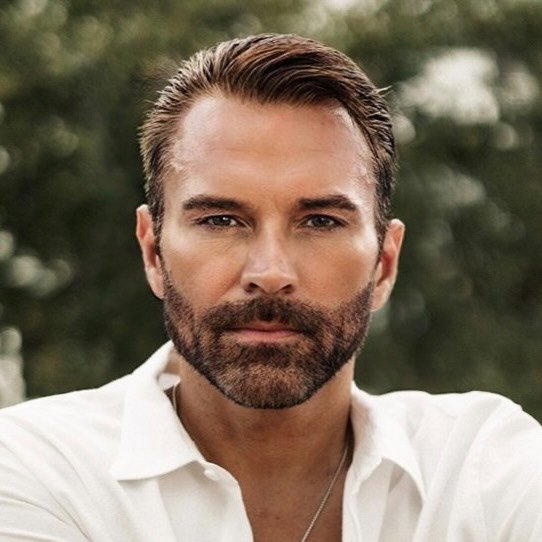
Serial Entrepreneur & Market Growth Expert
Mark Young is a seasoned entrepreneur and executive at Zona Health, the company behind the Zona Plus device. After years of building and launching startups, he joined the team in 2016 with a clear mission: to bring the benefits of isometric exercise and cardiovascular health into everyday homes.
Throughout his career in business and technology, a consistent theme has been his passion for education and delivering practical, science-backed solutions in an accessible way. With multiple graduate degrees and a strong track record of scaling startups, Mark has deep expertise in compliance, marketing, and growth—particularly within regulated health and wellness industries.
At Zona Health, he focuses on helping individuals understand how simple, at-home interventions can support healthier blood pressure and improved cardiovascular function. The Zona Plus has also attracted attention from biohackers like Dave Asprey, who has highlighted it as a powerful tool for enhancing cardiovascular health and overall performance.
Mark is a strong guest for podcasts covering health, biohacking, longevity, blood pressure, and cardiovascular wellness, as well as entrepreneurship and the process of building compliant, science-driven products in the health space.