Crafting Worlds: The Creative Process Behind The Legend of Leanna Page

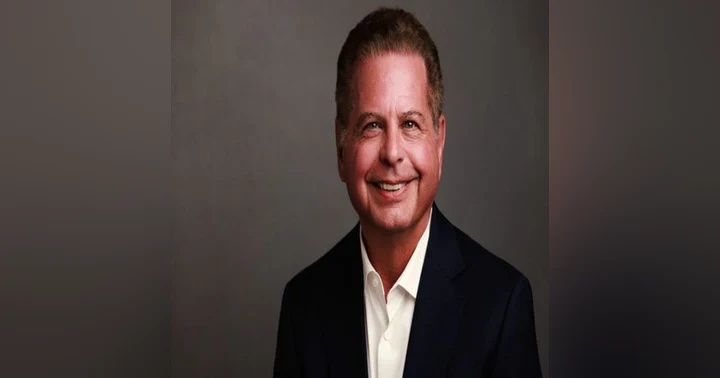
Welcome back to the blog space. If you have been listening to the latest episode of the podcast, you know that we have been diving deep into the intersection of creativity, social activism, and world-building. Today, I am thrilled to expand on our recent conversation with the visionary writer and theatre-maker, Addam Ledamyen. In our recent episode, Addam Ledamyen- Storyteller Imagining a Better World, we explored how he uses storytelling not just as an escape, but as a mechanism for imagining a better, more equitable world. In this post, we are going to peel back the layers of his creative process, specifically focusing on his acclaimed novel, The Legend of Leanna Page, and how his unique background in the performing arts shapes the way he constructs fantasy universes.
The Visionary World of Addam Ledamyen
To understand the depth of The Legend of Leanna Page, one must first understand the mind of its creator. Addam Ledamyen is not merely a novelist; he is a multidisciplinary artist. As the founder and Artistic Director of For Elenvia, his work is rooted in the belief that storytelling is a form of civic duty. For Addam, fantasy is not a genre relegated to distant, unreachable realms; it is a canvas upon which we can project our hopes, address our societal shortcomings, and map out potential futures.
When you read The Legend of Leanna Page, you aren't just engaging with a plot; you are stepping into a curated experience. Addam brings a level of intentionality to his world-building that is rare in contemporary fantasy. He asks fundamental questions that many authors overlook: How does the architecture of this world influence the psychology of its inhabitants? How do the power structures in this fantasy realm mirror our own? By exploring these questions, he transforms the act of writing into an act of social imagination.
The Intersection of Theatre and Prose: How an MFA Informs the Craft
A significant part of what makes Addam’s writing style so distinct is his academic background. Holding an MFA in Interdisciplinary Arts and Writing from the California Institute of Integral Studies, he approaches the page with the sensibilities of a theatre-maker. This is not a common trajectory for fantasy authors, and the results are profound.
In theatre, every element—lighting, set design, pacing, dialogue, and movement—is a tool for storytelling. When Addam sits down to write prose, he is not just describing a scene; he is staging it. He thinks about how a character enters a room, how the tension in the dialogue fluctuates like a performance, and how the "set" of his world (Elenvia) informs the dramatic arc. This theatrical background allows him to create scenes that feel visceral and immediate.
Furthermore, his MFA studies encouraged an interdisciplinary approach. He is adept at weaving together disparate concepts—philosophy, political theory, and artistic structure—into a cohesive narrative. This depth allows The Legend of Leanna Page to transcend the traditional tropes of the genre. It is not just about magic systems and epic battles; it is about the internal drama of characters struggling to define their existence within a larger, complex systemic framework. His training has taught him that the most effective stories are those where character internalities are just as important as the external obstacles they face.
Designing Elenvia: Principles of Fantasy World-Building
World-building is often the most daunting task for a fantasy writer. Many fall into the trap of over-explaining the mechanics of magic or the genealogy of fictional kingdoms. Addam takes a different approach. For him, the world of Elenvia is designed to reflect the themes he wants to explore.
He works from the inside out. Instead of drawing a map and filling it with history, he begins with a social or philosophical question. He constructs the environment of Elenvia to either facilitate or challenge the characters as they grapple with that question. For instance, if he wants to explore themes of isolation or connectivity, he builds a geographic and social structure that makes these themes unavoidable for his characters.
Additionally, he believes in the principle of "lived-in" history. A world should feel like it existed long before the protagonist entered it. By layering the mythology of Elenvia, he creates a sense of immense weight and texture. Readers don't just feel like they are reading about a made-up place; they feel like they are inhabiting a living, breathing ecosystem with its own cultural norms, prejudices, and triumphs. This, combined with his theatrical sensibilities, means that when a reader "walks" through Elenvia, they are not just reading text; they are experiencing a fully realized, multi-sensory environment.
Character Development in The Legend of Leanna Page
At the heart of any great fantasy novel lies a character that the reader can anchor themselves to. In The Legend of Leanna Page, the titular character is a testament to Addam’s ability to weave complex, human experiences into fantastic scenarios. Leanna is not a chosen one who effortlessly achieves greatness. She is a figure defined by her struggles, her questions, and her capacity for growth.
Addam crafts his characters by giving them deep, psychological motivations that are rooted in universal human experiences, even while they operate within the constraints of a fantasy world. He spends a significant amount of time exploring the "why" behind his characters' actions. He avoids the flatness of purely heroic or purely villainous archetypes. Instead, he presents a cast of characters who are messy, contradictory, and deeply human.
His theatrical training also shines through in his character dialogue. He writes with a keen ear for subtext. In his stories, what is not said is often more important than what is stated outright. This technique forces the reader to engage actively with the text, piecing together the true intentions and fears of the characters. It creates a dynamic where the reader feels like they are participating in the creation of the narrative alongside the author.
Storytelling as a Tool for Social Imagination
Perhaps the most compelling aspect of Addam Ledamyen’s work is his insistence that storytelling is a tool for social change. He isn't just writing to entertain; he is writing to challenge. Through his organization, For Elenvia, he demonstrates that artistic production should aim to "imagine a better world."
In The Legend of Leanna Page, the issues facing the characters are often mirrors of the issues we face today: inequality, the struggle for agency, the impact of entrenched power structures, and the importance of community. However, by placing these issues within a fantasy setting, he creates a safe space for readers to examine them without the immediate baggage of real-world politics. This "distancing effect"—a concept familiar to students of theatre—allows for a more objective, and perhaps more radical, reflection on our own society.
He invites us to ask: If we can imagine an entirely new world, why can't we imagine a new way of living in our own? This is the core of his creative philosophy. Storytelling is the first step toward activism. If we cannot first imagine a world that is more equitable, more compassionate, and more just, we can never build it.
Conclusion: Encouraging the Next Generation of Storytellers
Addam Ledamyen’s journey serves as a powerful reminder that our creative pursuits are always linked to the broader world around us. By merging the technical craft of an MFA, the visceral tools of the theatre, and a deep-seated commitment to social change, he has crafted a body of work that is as thought-provoking as it is entertaining. Whether you are an aspiring author looking to build your own world or simply a reader seeking a story that challenges your perspective, Addam’s approach offers a masterclass in purposeful creation.
I hope this deep dive into his process inspires you to look at your own creative projects with a new lens. Ask yourself: What is the philosophical anchor of your work? How can your storytelling serve the world you want to live in? For more insights into Addam's work and his mission to use art as a catalyst for a better future, make sure to listen to our full discussion in the podcast episode Addam Ledamyen- Storyteller Imagining a Better World. Let us continue to create, to dream, and to imagine the better worlds that are waiting to be written.
Rewriting the Rules of Wellness: My 105-Pound Journey from CNO to CEO